Full-Spectrum Mushroom Powders vs. Isolated Extracts: The Whole Mushroom Matrix Advantage
Walk into a health food store anywhere in North America and you will find shelves stacked with functional mushroom extracts. Bold numbers like "8:1" or "18:1" dominate the labels, and phrases like "high-potency Reishi mushroom extract" or "Lion's Mane mushroom extract standardized for hericenones" catch the eye. These products are not making crazy claims. Extraction is a legitimate processing method with a long history in herbal medicine. But the story of what gets left behind during extraction is one that deserves a closer look.
At Myzel, we take a different approach: whole-matrix, full-spectrum fermentation. For those looking for the best functional mushroom supplements available in Canada or the United States, here is why that matters.
Beyond Isolation: What Extraction Concentrates and Also Leaves Behind
Extraction works by using a solvent (often times water, alcohol, or both) to pull target compounds out of raw mushroom material. Hot water extraction is good at pulling water-soluble compounds like polysaccharides and beta-glucans. Alcohol extraction concentrates non-polar compounds like triterpenoids. An "8:1" ratio simply means eight parts of starting material were processed down to one part finished extract. It describes concentration, not necessarily completeness.
The limitation is straightforward: anything that does not dissolve in the chosen solvent stays behind in the discarded material, called the marc, and never makes it into the final product. Measurable differences have been found in metabolite profiles between mycelium and fruiting bodies across functional mushrooms, confirming that each tissue contributes unique secondary metabolites that would not be captured by a focussed extract.
That matters because mushrooms are biochemically complex. They contain beta-glucans, triterpenes, sterols, indole alkaloids, enzymes, amino acids, phenolic compounds, and chitin-glucan complexes. These compounds do not all live in the same tissue or respond to the same solvent. Choosing a single extraction method means choosing which fraction to keep and which to discard.

Bioactive Complexity: The Case for the Whole Mushroom Matrix
The functional mushroom benefits that customers are looking for are rarely found in a single compound acting in isolation. Lion's Mane mushroom is a good example. It produces two distinct neuroactive compounds: hericenones, which are mainly found in the fruiting body, and erinacines, which are mainly found in the mycelium. Both are linked to nerve growth factor (NGF) and offer neuroprotective and neuroregenerative activity. An extract that only targets specific compounds captures only that bioactive, and leaves the rest behind. A whole-matrix powder that combines both tissues keeps all compounds together.
This same logic can apply to Reishi. The fruiting bodies are the main source of ganoderic acids, also known as triterpenes, which can offer anti-inflammatory activity, liver support, and cellular protection. But polysaccharides are mainly found in the mycelium and often support antioxidant protection and bioavailability.
Beyond the nutrients, whole-matrix mushroom powders include the fungal cell wall in the final product, also known as the beta-glucan and chitin matrix. The immune system has "sensors" (called Dectin-1) located in the gut, and they are specifically designed to look for these mushroom materials. The most important part is that your immune system reacts to the structure of this matrix, not just the individual ingredients. It’s like a lock and key: the key only works because of its specific shape. If you break the structure down too much, the "key" no longer fits the "lock," and your immune system might not respond as effectively.
The Synergy Effect: Breadth vs. Depth
While an 8:1 extract sounds like "more," it’s actually a "less is more" situation where the "less" is the missing bioactives, structural fibers (chitin), and prebiotic benefits the body is looking for. But each application has its place.
Extracts are built for depth. They concentrate a few compounds to very high levels, which can be useful for specific clinical applications where a defined dose is needed. There is genuine value in that approach.
Full-spectrum powders are built for breadth. They preserve the full range of polysaccharides, sterols, enzymes, antioxidants, and species-specific metabolites as they occur together in nature. This is the way that mushrooms actually produce and release them in food format.
The fermented white sorghum substrate that the mushrooms grow on also acts as a prebiotic, which is great fuel for the healthy bacteria living in the gut. Research shows that the tough, structural fibers found in mushroom material do much more than just provide nutrients; they actually help the body better process food after a meal and improve the overall balance of the "gut neighborhood." This is helpful for people concerned about heart health or blood sugar levels. Ultimately, it proves that the physical fiber structure of the mushroom is just as important for health as the individual compounds found inside it.
The Myzel Approach: Designed by Nature
Most mushroom extract products on the market are made using harsh chemicals like alcohol or acetone to isolate specific nutrients out of the mushroom.
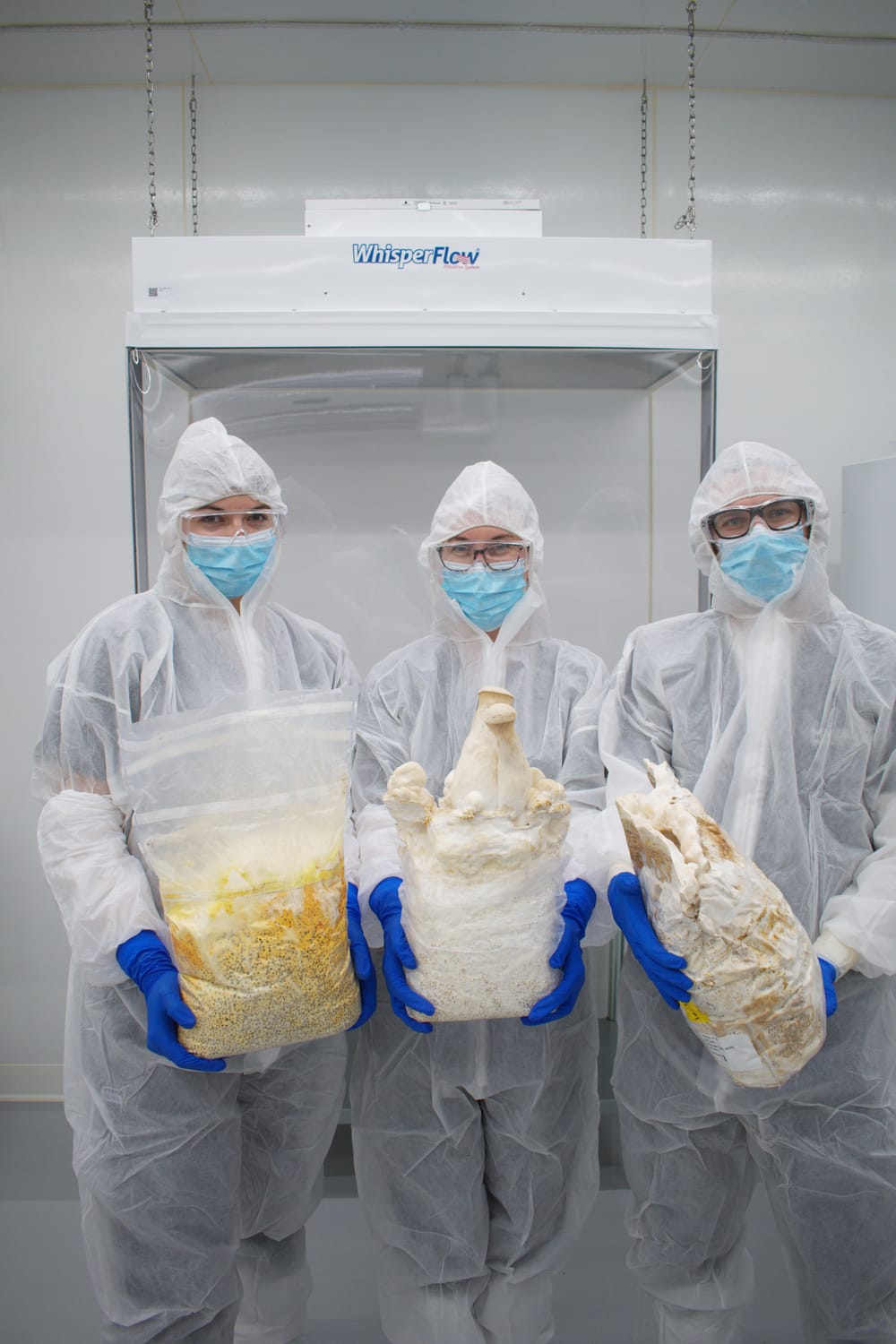
Myzel does it a little differently: solid-state fungal fermentation with no solvent extraction and no fractionation. The mycelium is grown in a sterile environment on a food-grade carbon source, organic white sorghum. As the mycelium grows, it secretes enzymes that digest the sorghum and convert it into a dense network of bioactive fungal tissue and secondary metabolites. By the time of harvest, the leftover sorghum in the final product is nearly non-existent. What remains is not mushroom on grain. It is a bioconverted mushroom matrix.
The finished product is dried, milled, metal-detected, sifted, packaged, and third-party tested, without the use of solvents, carrier agents like magnesium stearate, binders, or fillers. Certified Canadian organic under Ecocert which hold equivalences for USDA, and EU standards, and produced in an SQF-certified, GMP and HACCP compliant facility.
A Note on the Ongoing Conversation
The debate between extracts and whole-food powders is real, ongoing, and worth taking part in with honesty. Extracts have a legitimate place in functional mushroom products, especially when specific compound concentrations are needed or when a product requires standardization for regulatory purposes. We respect that approach and the science behind it.
What we believe, based on the research and on our own process, is that whole-matrix powders offer something that extracts cannot fully replicate. The benefits of the chitin, the full range of metabolites, the enzymatic activity, and the prebiotic fiber are what makes functional mushrooms functional in the first place.
Choosing the best functional mushroom supplement means understanding what is actually in the product, how it was processed, and what the science supports. We are committed to transparency on all of these fronts.
When choosing between a functional mushroom extract and a whole-food powder, consider the final delivery method and the intended outcome. Extracts may offer high concentrations of a single compound, which are useful for targeted clinical applications. Myzel's whole-matrix powders provide something broader: the prebiotic fiber, enzymatic activity, full polysaccharide spectrum, and the chitin biology support gut health and immune function across the complete bioactive range. For pet health applications in particular, where chemical-free, palatable, gut-supporting properties are most important, whole-food powders offer a clean ingredient profile with no additives, binders, or residual solvents.
Connect Like Mycelium



Drop your email address below to get our newsletter.
Created with © systeme.io
Privacy policy | Terms of use | Cookies