The Hidden Footprint in Your Mushroom Supplement (And Why Where It's Grown Matters)
Historically, consumers didn’t look as deeply into their functional mushroom product of choice as they probably should have. They looked at the species, the dose, maybe the extract ratio, if that applies. As mushroom enthusiasts are getting savvier, many are flipping the packaging over to discover where the mushroom was actually grown. That single piece of information can shape the carbon footprint of the product, the quality of the powder inside, and often the level of instant impression trust factor. As the functional mushroom market grows, sourcing is becoming a quiet but powerful quality marker.
This article looks at why North American-grown sourcing matters, what Canadian quality standards bring to the table, and why proximity to your supplier is worth thinking about.
The Carbon Cost of Long-Distance Sourcing
A large share of the world's functional mushroom raw materials are still cultivated in Asia, with China holding the largest single share of global production. When those ingredients are shipped to North America, every kilometer adds emissions to the final product.
International shipping accounts for nearly 3% of global greenhouse gas emissions. Cold-chain storage, packaging, customs handling, and warehousing add more on top. For a product as light as mushroom powder, the freight footprint per kilogram of finished supplement can be surprisingly heavy.
In today’s geopolitical environment, cost is adding up quickly. Shipping cost is increasing at a rapid rate as the cost of fuel is on the rise. Heavier freight traveling from a further distance only exacerbates that cost more and more, seriously affecting margins.
Sustainability is now a core buyer concern. For example, the Pet Sustainability Coalition's 2025 State of Sustainability Report found that supply chain transparency and reduced emissions are among the top priorities for buyers in the pet and supplement space.
Why Local Sourcing Helps More Than Just Emissions
Shorter supply chains do more than cut carbon. They reduce the number of handoffs between producer and finished product. This not only lowers the risk of contamination during transit, but it protects quality, since mushroom bioactives like beta-glucans can degrade with heat, humidity, and long storage windows.
Local sourcing also means fewer customs delays and less time sitting in shipping containers. For brands, this often shows up as more consistent batch quality and shorter lead times. For shoppers searching for organic functional mushroom powders, it means a fresher product with a clearer paper trail.
Canadian Quality: A Standard the World Looks To
Canada's regulatory framework for natural health products is among the most rigorous in the world. Every functional mushroom supplement sold in Canada must be authorized by Health Canada's Natural and Non-prescription Health Products Directorate before it reaches a shelf. This includes pre-market review, Good Manufacturing Practices, and licensed production sites.
The Canadian Food Inspection Agency adds another layer of oversight on food-grade handling. Many Canadian facilities also carry international certifications such as SQF, HACCP, and USDA and EU Organic standards.
This rigour is one reason Canadian-grown botanical and functional ingredients are sought out by formulators in Europe and Asia. When a label says made in Canada, it carries weight on both sides of the ocean.
Why Overseas Sourcing Can Raise Questions
There are excellent producers in every region of the world. The point is not that overseas mushrooms are bad. The point is that distance and differing regulatory standards make verification harder.
Mushrooms are bioaccumulators, which means they pull whatever is in their growing environment into their tissue. Studies have shown that mushrooms grown near industrial areas or contaminated soil can carry elevated levels of heavy metals such as cadmium, lead, and mercury. Independent testing has also found species mislabeling in some commercial mushroom products, where the listed species did not match the DNA of the powder inside.
None of this means imported mushrooms are unsafe. It means buyers benefit from knowing where their supplement comes from, who tested it, and against what standard.
What This Looks Like at Myzel
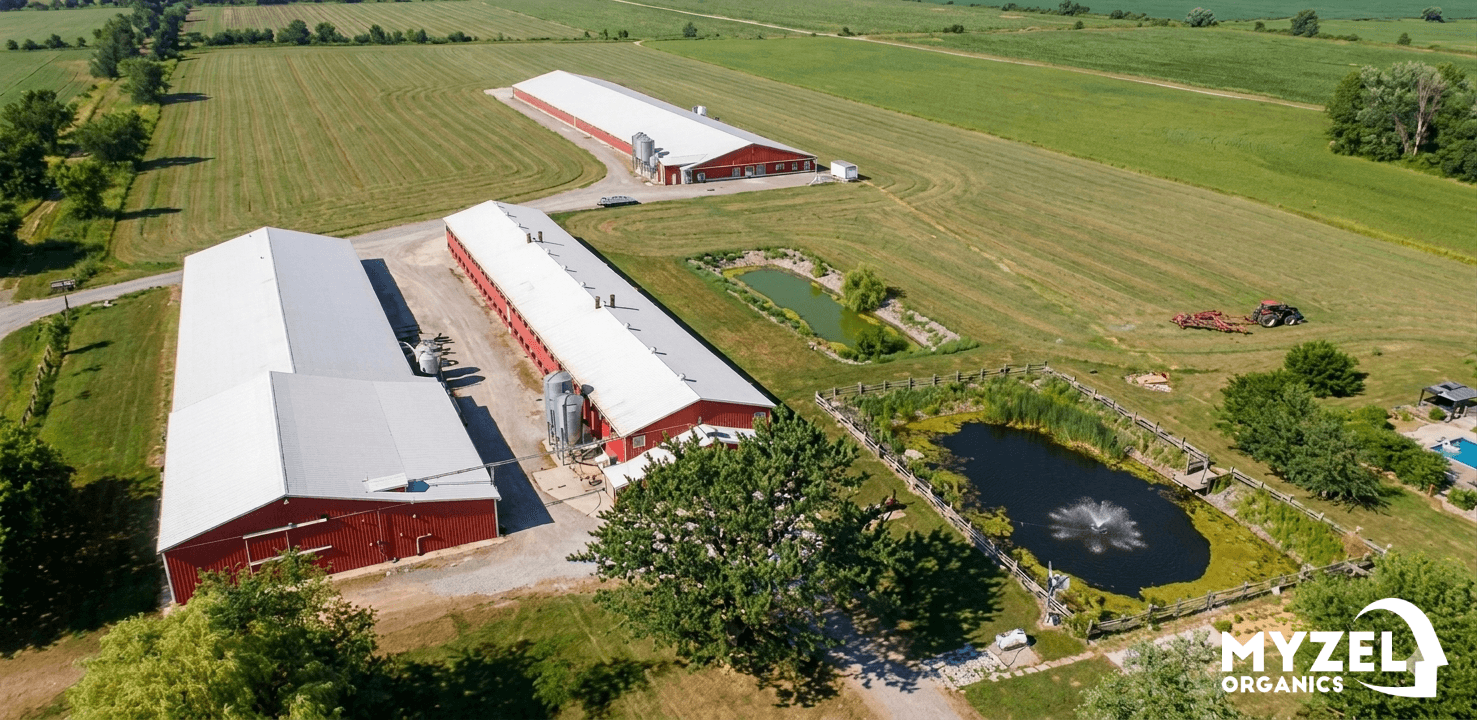
Myzel Organics cultivates full-spectrum mushroom powders in Wainfleet, Ontario, in a retrofitted poultry farm that runs on renewable energy solutions. The facility is SQF certified, GMP and HACCP compliant, and certified organic under both USDA and EU standards.
Indoor cultivation removes seasonality from the equation, so there is no need to bridge supply gaps with imports. Solid-state fermentation uses 100% of the biomass, producing 3 to 5 times more biomass per square foot than fruiting-body-only cultivation while reducing water and substrate waste. Every culture is genetically sequenced for authenticity, and every batch is third-party tested for heavy metals, microbials, mycotoxins, gluten, and allergens.
For product developers, North American sourcing is more than a sustainability story. Genetic sequencing, certificates of analysis, and clear country-of-origin paperwork shorten regulatory submissions and retail compliance reviews. Domestic supply also offers shorter lead times, which protects against geopolitical interruptions, port delays, and shipping costs and disruptions. When every batch comes from a single SQF-certified facility, batch consistency is easier to maintain across SKUs, which simplifies formulation work and quality control across an entire product line.
The Bottom Line
Where a mushroom is grown affects almost everything that comes after, from carbon footprint to bioactive integrity to how easily a buyer can verify what they bought. For brands and shoppers who care about a smaller environmental impact and a clearer paper trail, North American-grown is worth a closer look.
Connect Like Mycelium



Drop your email address below to get our newsletter.
Created with © systeme.io
Privacy policy | Terms of use | Cookies