Beta-Glucans 101: Understanding How Functional Mushrooms Support the Immune System
If you have ever read the label on a functional mushroom product, you have probably seen the words "beta-glucans" and "polysaccharides" listed front and center. There is a good reason for that. Beta-glucans are widely considered the primary driver of the health benefits we associate with mushrooms. For both people and pets, they are the main reason researchers keep coming back to species like Reishi, Turkey Tail, Maitake, and Shiitake.
This article walks through what beta-glucans are, why their percentage on a label matters, how mushroom-derived beta-glucans differ from those found in sorghum, oats, or yeast, and why standardized testing matters when you are choosing the best functional mushroom blend for immune support.
The Immune Key: How Beta-Glucans Prime the Body
Beta-glucans are a specific kind of polysaccharide, which is a long molecule made of many sugar units linked together. In fungi, these molecules sit inside the cell wall and form a twisted, branching shape held together by what scientists call beta-1,3 and beta-1,6 bonds. That shape is what makes them so interesting. The immune system has built-in receptors that recognize this exact pattern.
The most studied of these receptors is called Dectin-1, and it sits on the surface of immune cells like macrophages and dendritic cells. When beta-glucans interact with Dectin-1, they signal those cells to get ready, raising their activity level so the body can respond more efficiently to challenges. This is part of what people mean when they ask what are the benefits of functional mushrooms. Beta-glucans help prime the immune system rather than overstimulate it.
Mushrooms do not need to enter the bloodstream to do this work. Most of the action happens at the gut-associated immune interface, where immune cells are concentrated and constantly scanning for signals. That is why whole-food mushroom powders can be effective even though beta-glucans themselves are large molecules.
Quality Matters: What to Look for on a Label
Walk down any wellness aisle and you will see a wide range of mushroom products. Some are clear about what is inside. Others are not. The most trustworthy functional mushroom brands tend to share the same habits: they name the species used, identify the part of the mushroom in the powder, and confirm that the bioactive compounds are only coming from the fungus itself.
Reishi (Ganoderma lucidum) is a useful example. Its active constituents include beta-glucans, triterpenes such as ganoderic acids, polysaccharides, and sterols. Beta-glucans support immune cell activity and balanced immune function, while ganoderic acids are linked to anti-inflammatory activity, liver support, and cellular protection. A quality Reishi product ensures that the beneficial beta-glucans are only coming from the mushroom tissue, and no other source.
For Reishi mushrooms in particular, some brands choose to specify beta-glucans and triterpenes percentages and some do not, and there are good reasons on both sides. What matters more than any number on a panel is whether the brand can verify the fungal source of those compounds. A high beta-glucan reading means very little if the glucans are not actually coming from the mushroom.
That is the question worth asking. Is the testing method validated for fungal beta-glucans specifically? Has the substrate been tested separately to rule out contributions from grain? Brands that can answer those questions clearly are giving you a more honest picture than a label number alone ever could.
Mushroom vs. Yeast vs. Oats: Why the Source Matters
Not all beta-glucans are the same. The shape of the molecule changes depending on where it comes from, and the immune system can tell the difference.
Mushroom beta-glucans are primarily structured as beta-1,3 and beta-1,6 linkages. Cereal beta-glucans, like the ones in oats and barley, are mixed-linkage beta-1,3 and beta-1,4 molecules. Validated fungal tests, or assays, are designed to distinguish between these two types. Yeast-derived beta-glucans share the 1,3-1,6 structure with mushrooms but lack the whole mushroom matrix of chitin, mannans, and species-specific compounds that mushrooms naturally contain.
That whole mushroom matrix appears to play a real role. The immune system seems to recognize the whole cell wall pattern rather than any single isolated piece. In mushrooms, beta-glucan and chitin are bonded together in the cell wall, and chitin-containing fungal fibers have been shown in human clinical studies to interact with the gut microbiome. Full-spectrum mushroom powders preserve this natural beta-glucan and chitin matrix, which is one of the reasons we believe deeply in the full-spectrum approach. Concentrated extracts are valuable too, and they remain a strong option for many applications. We simply choose to work with the whole mushroom because the structural biology stays intact.
Consistency Is Key: Why Standardized Processes Matter
Beta-glucan content in mushrooms varies depending on the species, growing conditions, and processing methods. That variability is a real problem if you want a product that performs the same way every time you give it. Standardization is how reputable producers solve this.
Standardization is not only about what comes out at the end. It starts with how the mushrooms are grown. At Myzel Organics, consistency is built into every step of the process, from the genetics of the cultures we use to the conditions our mushrooms grow into the way our powders are milled and packaged. Each stage is controlled and repeatable, which is what allows the finished powder to perform the same way batch after batch. When the inputs and the process stay consistent, the outcome stays consistent too.
This kind of consistency matters for everyone, but it is particularly important when formulating for pets. Research in healthy adult dogs found that purified beta-glucans at a daily dose of 10.60 mg per kg of body weight improved immune cell balance and gut microbiome composition. A separate study in adult beagles given Reishi at 15 mg per kg per day showed stronger immune cell activity and higher vaccine antibody response. And in senior dogs, 16 weeks of Lion's Mane whole mushroom powder shifted gut bacteria toward a healthier balance and reduced populations linked to inflammation. Without batch-to-batch consistency, hitting these effective doses reliably is difficult. With it, formulators can build products that support immune health in puppies, adult dogs, and senior dogs alike.
One more point from the research is worth emphasizing. A study found that immune benefits from beta-glucan supplementation reversed quickly once dogs stopped receiving it. That tells us mushroom-based ingredients work best when they are part of a daily routine.
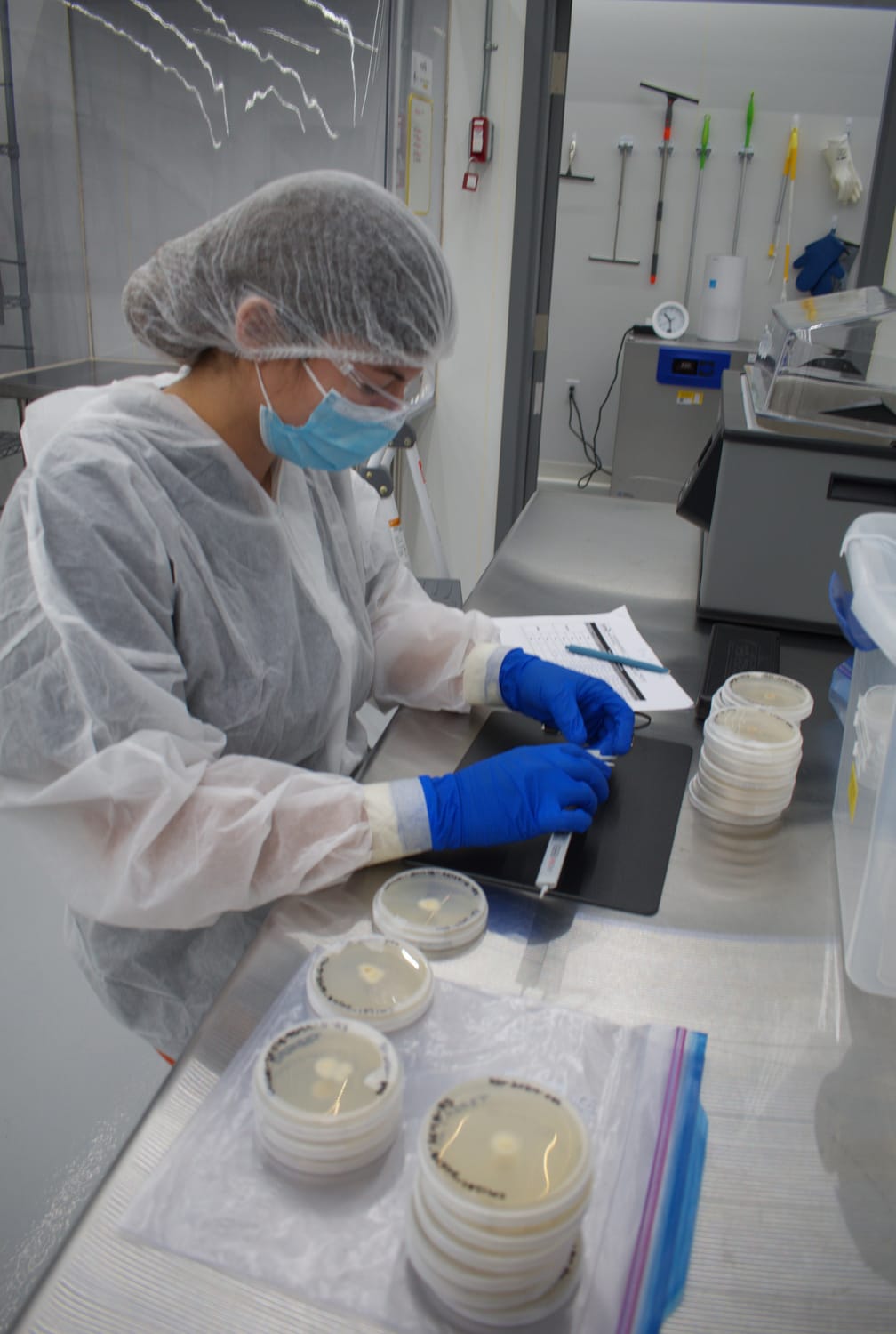
Some mushroom products are grown on grain substrates such as oats, barley, or sorghum. Because oats and barley naturally contain their own beta-glucans, leftover substrate in a finished powder can inflate test results and make a product look more potent than it really is.
There are two reasons this is solvable. First, fungal beta-glucans are structurally different from cereal beta-glucans. Mushroom beta-glucans are primarily beta-1,3 and beta-1,6, while cereal beta-glucans are mixed-linkage beta-1,3 and beta-1,4. Validated fungal assays are designed to tell them apart. Second, responsible producers test both the substrate and the finished material. At Myzel Organics, our sorghum substrate was third-party tested using an accredited beta-glucan assay and showed less than 0.1 percent beta-glucans. Our finished product tests well in fungal beta-glucans, and that reflects the mushroom itself, not the substrate.
For formulators evaluating a supplier, two questions are worth asking. Was the assay validated for fungal beta-glucans specifically? And was the substrate tested separately so substrate-derived glucans can be ruled out? Clear answers to both are a strong sign of quality control.
Bringing It Together
Beta-glucans are the most studied compounds in functional mushrooms, and the science behind them keeps growing. They prime the immune system through receptors like Dectin-1, they work alongside other compounds such as triterpenes in Reishi mushrooms, and they show measurable effects in humans and animals at well-documented doses. The structural shape of the molecule, the matrix it sits in, and the consistency of the finished powder all influence how well it performs.
There is real value in many approaches to functional mushrooms, from traditional decoctions to modern dual extracts to full-spectrum powders. Each method has its strengths, and each has helped move this industry forward. At Myzel Organics, we have chosen to focus on full-spectrum, standardized powders because we believe the natural fungal matrix offers something special. The research supporting beta-glucans, however they are delivered, is genuinely exciting for human health and pet health alike.
Disclaimer: Any statements or claims about the possible health benefits conferred by any foods, natural health products, or supplements have not been evaluated by the Canadian Food Inspection Agency (CFIA), Health Canada, or the Food & Drug Administration (FDA) and are not intended to diagnose, treat, prevent, or cure any disease.
Connect Like Mycelium



Drop your email address below to get our newsletter.
Created with © systeme.io
Privacy policy | Terms of use | Cookies